Pet Care Tips & Info
When Should Your Pet Have a Dental Cleaning in Doral?
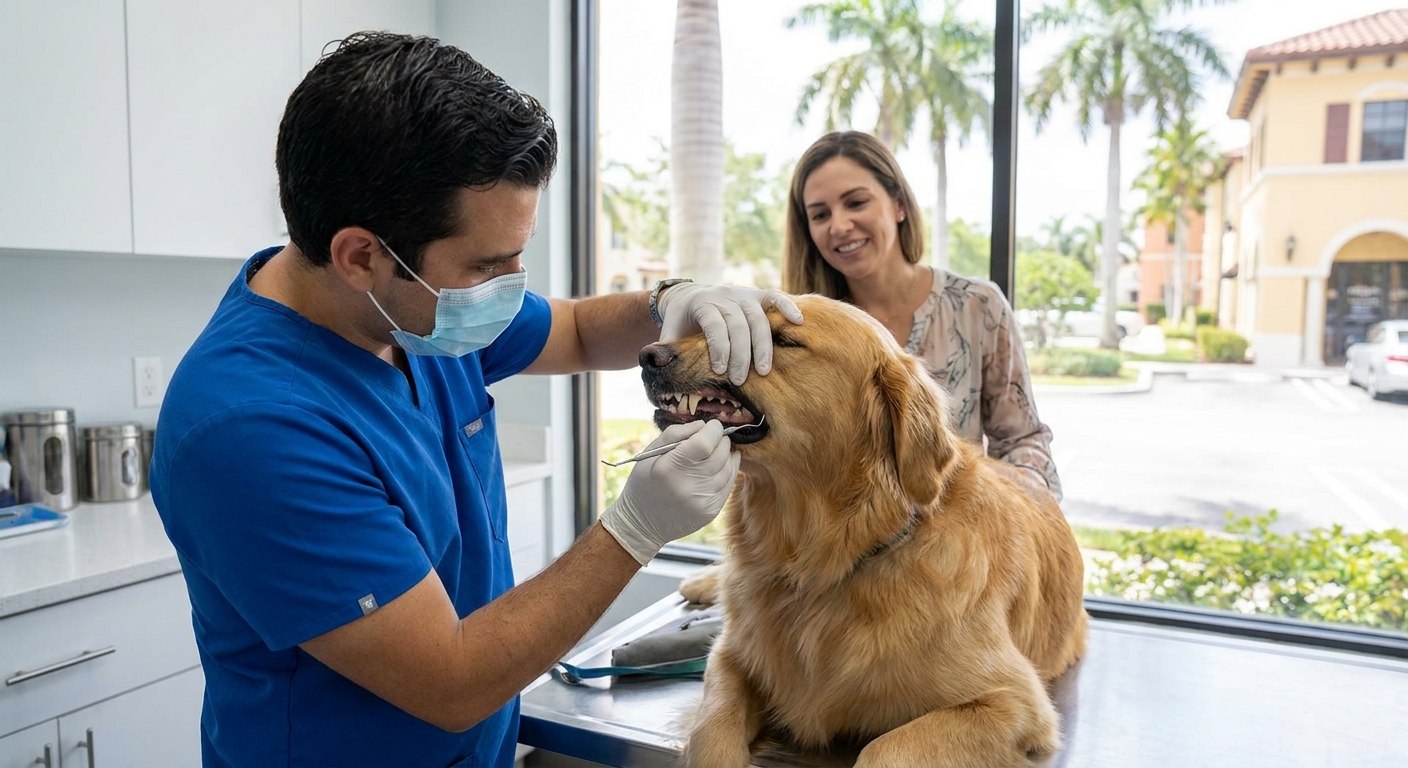
Most pet owners in Doral focus on vaccines and vet visits. They track heartworm pills and update rabies records. But when it comes to teeth? That's where things get murky. Dental health doesn't always scream for attention — until your dog stops eating or your cat's breath could strip paint. By then, you're dealing with pain, infection, and a vet bill that could've been avoided months ago.
Professional cleanings aren't optional maintenance. They're preventive medicine. And if you're waiting for obvious symptoms before you book one, you're already behind. Plaque doesn't announce itself. Tartar builds quietly. And once gum disease sets in, it doesn't just stay in the mouth — it travels. Heart valves, kidneys, liver — all at risk when oral bacteria goes systemic.
The Damage Happens Before You Notice
Dental disease ranks as one of the top health issues hitting dogs and cats across the board. It starts with biofilm — that invisible layer of bacteria your pet accumulates after every meal. Left unchecked, it hardens into tartar, pushes under the gumline, and triggers inflammation. Gingivitis follows. Then comes periodontal disease, bone loss, and tooth mobility.
And here's the kicker — your pet won't tell you it hurts. Animals mask discomfort instinctively. By the time you see them struggling with kibble or pawing at their face, the problem's entrenched. That's why waiting for red flags is a losing strategy. Proactive scheduling beats reactive scrambling every time.
Warning Signs That Mean It's Time
You don't need to be a veterinarian to spot trouble brewing. Some symptoms are loud enough to catch if you're paying attention. Others require a closer look — literally. Check your pet's mouth regularly, and don't ignore what you find.
- Breath that smells like rotting garbage or worse
- Visible yellow or brown crust caked on the teeth
- Gums that look swollen, dark red, or bleed when touched
- Reluctance to chew hard food or toys
- Dropping food mid-bite or chewing only on one side
- Rubbing the face against furniture or pawing at the mouth
- Teeth that wiggle or have already fallen out
- Drooling more than usual without an obvious reason
If even one of these shows up, schedule an exam. Don't wait for two or three to pile up. Dental disease moves faster than most people realize, and every week you delay gives bacteria more time to dig in.
How Often Cleanings Actually Need to Happen
There's no universal schedule that works for every dog or cat. Frequency depends on genetics, diet, age, and how much plaque your pet naturally produces. But most vets in Doral start with annual cleanings as the baseline — then adjust from there based on what they see.
Small breeds and brachycephalic pets — think Yorkies, Chihuahuas, Persians, and Pugs — tend to accumulate tartar faster. Crowded teeth and shallow root structures create more surface area for buildup. These animals often need cleanings every six to nine months just to stay ahead of disease. Senior pets fall into a similar category. As they age, their immune systems weaken and their gums recede, making them more vulnerable to infection.
- Most healthy adult pets benefit from annual cleanings
- Small dog breeds often require cleanings every six to nine months
- Flat-faced cats and dogs may need more frequent intervention
- Senior animals typically need cleanings more often due to age-related changes
- Pets with a history of dental disease should follow a customized schedule
Your Doral vet will assess your pet's mouth during routine exams and recommend a timeline that fits. Stick to it. Skipping a cleaning because your pet "seems fine" is how you end up with extractions instead of prevention.
What Actually Happens During the Procedure
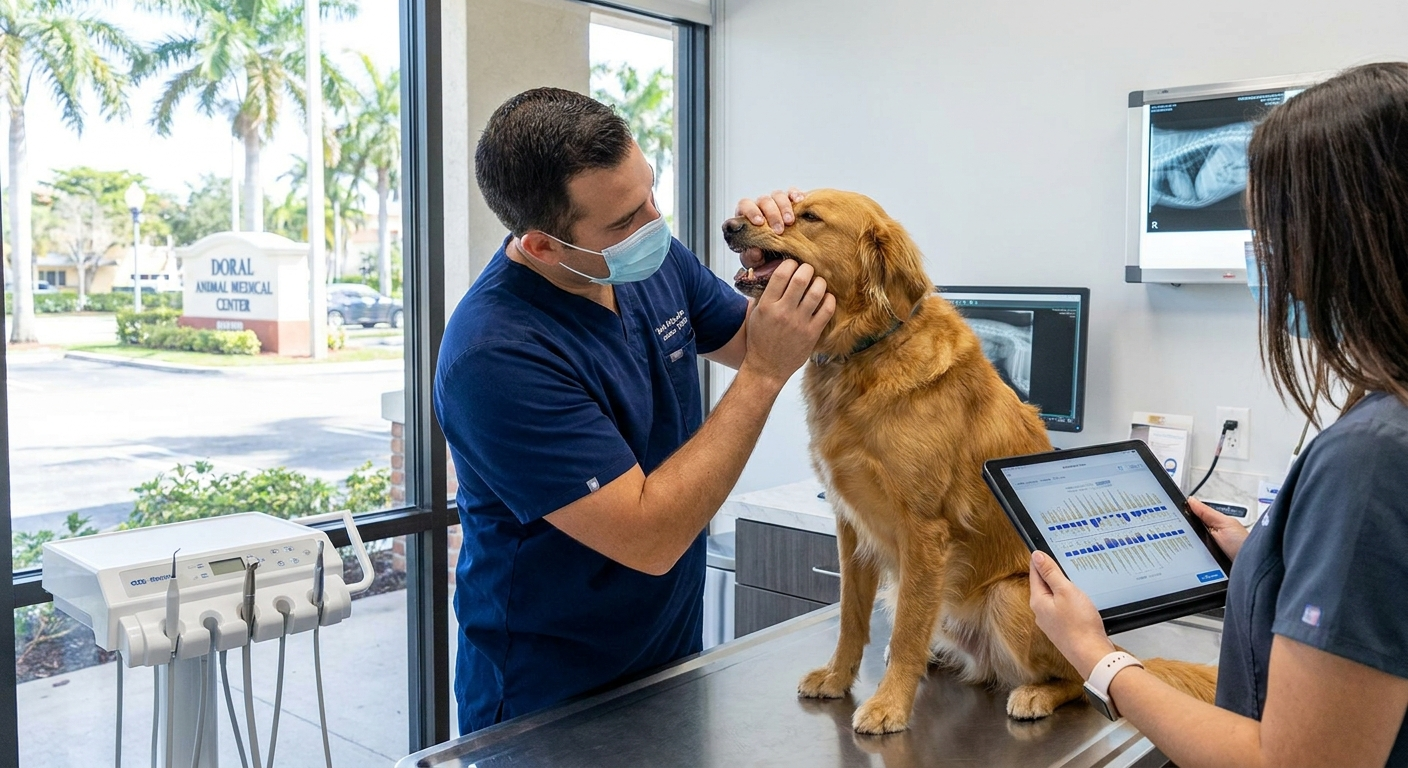
Professional dental cleanings aren't like brushing at home. This is anesthesia-required, full-scale oral surgery territory. Your pet goes under so the veterinary team can work safely and thoroughly — scaling below the gumline, probing for pockets, taking X-rays to catch what's hidden.
The process starts with a complete oral exam. Then comes scaling to remove plaque and tartar from every visible and subgingival surface. After that, polishing smooths the enamel and makes it harder for bacteria to reattach. Dental radiographs reveal bone loss, abscesses, or fractured roots that can't be seen from the outside. If a tooth is too damaged to save, extraction happens on the spot.
- Full oral examination under anesthesia
- Ultrasonic scaling to remove plaque above and below the gumline
- Polishing to create a smooth, bacteria-resistant surface
- Digital X-rays to identify hidden disease or fractures
- Extractions performed when teeth are beyond saving
Once your pet wakes up, you'll get a report on what was found and what needs monitoring going forward. If follow-up cleanings are recommended sooner than a year out, that's not overkill — it's reality.
The Payoff Goes Beyond Fresh Breath
Routine cleanings do more than make your pet's mouth smell better. They reduce the bacterial load that can seed infections in distant organs. They eliminate pain your pet was silently managing. They prevent tooth loss that affects how well your dog or cat can eat for the rest of their life.
- Stops periodontal disease before it causes tooth loss
- Protects the heart, kidneys, and liver from bacterial spread
- Relieves chronic pain your pet wasn't showing
- Improves appetite and quality of life immediately
- Extends lifespan by reducing systemic infection risk
If you're weighing cost against benefit, remember this — a cleaning runs a few hundred dollars. Treating advanced dental disease with extractions, antibiotics, and pain management? That bill climbs into the thousands. And your pet still suffers in the meantime.
Home Care Buys You Time Between Cleanings
Professional cleanings reset the clock. Home care keeps it from ticking too fast. Daily brushing with veterinary toothpaste is the gold standard — it mechanically removes biofilm before it hardens. Dental chews and water additives help, but they're not substitutes for brushing.
Most pets tolerate brushing if you introduce it gradually and use the right tools. Start with a finger brush or gauze, then move to a soft-bristled pet toothbrush. Never use human toothpaste — the fluoride and xylitol are toxic. Stick with enzymatic formulas designed for animals.
- Brush your pet's teeth daily with veterinary-approved toothpaste
- Offer dental chews that carry the VOHC seal of approval
- Feed a diet that supports oral health, not one loaded with sugars
- Schedule routine vet exams so problems get caught early
- Use water additives or oral rinses as a supplemental tool, not a replacement
Even with perfect home care, you won't eliminate the need for professional cleanings. But you can stretch the interval and reduce the severity of what your vet finds when they go in.
Don't Wait for the Smell or the Struggle
Dental care isn't something you address once symptoms appear. It's something you schedule before there's a problem — and stick with even when your pet looks healthy. The mouth is a window into systemic health, and ignoring it has consequences that ripple far beyond bad breath or a missing tooth.
At your next vet visit in Doral, ask for a dental assessment. Get a realistic timeline for your pet's needs. And if a cleaning is overdue, book it. Because the cleanings you schedule now determine how many teeth your pet keeps — and how many years they get to enjoy them.
Let’s Keep Your Pet Smiling
We all want our pets to live long, happy lives—and that starts with a healthy mouth. If you’re unsure when your pet’s next dental cleaning should be or you’ve noticed any warning signs, let’s talk it through together. Give us a call at 305-477-7387 or contact us today so we can help your pet stay comfortable, healthy, and ready for more tail wags and purrs.